

The optimal length of myotomy
Achalasia, an immune-mediated disorder of oesophageal dysmotility, is characterized by impaired relaxation at the oesophagogastric junction (OGJ) and the absence of peristalsis upon swallowing1. These pathological alterations culminate in a functional outflow obstruction at the OGJ, leading to inefficient transit of the food bolus and manifesting as symptoms of dysphagia and non-acid regurgitation2. Therapeutic interventions aim to disrupt the OGJ complex to facilitate passive bolus transit into the stomach, thereby alleviating symptoms and improving long-term quality of life. The primary objective of current therapeutic options is to achieve sustained relief of dysphagia while minimizing the risk of symptom recurrence. Standard treatments such as pneumatic dilation, laparoscopic Heller myotomy (LHM), and per-oral endoscopic myotomy (POEM) are employed to lower oesophageal sphincter (LOS) pressure, thereby enhancing oesophageal outflow dynamics and ameliorating symptoms3–5. These interventions represent frontline approaches in the management of achalasia, providing effective palliation by addressing the underlying pathophysiology of the condition.
The surgical management of achalasia stands out as the most effective approach among available treatments, offering favourable short- and long-term clinical outcomes5,6,7. This efficacy is particularly pronounced with the adoption of minimally invasive techniques, which have now become the preferred treatment for patients with idiopathic achalasia. However, despite the advantages of laparoscopic myotomy, it is important to acknowledge inherent limitations associated with the laparoscopic approach, such as bi-dimensional vision and restricted range of movement, which may impact on surgical precision. Recently, robotic technology has emerged as a promising alternative, with proponents suggesting its potential to reduce intraoperative oesophageal perforation rates and improve postoperative quality of life following Heller myotomy8. This potential enhancement is primarily attributed to the three-dimensional visualization and enhanced surgical dexterity offered by robotic systems.
Despite the widespread acceptance and rapid adoption of laparoscopic and robotic Heller myotomy as standard therapeutic modalities, a significant subset of patients (10-25%) experience symptom recurrence over time post-surgery9. For instance, in the European Achalasia Trial, which randomised patients to laparoscopic Heller myotomy (LHM) or pneumatic dilation, treatment success rates were reported at 90% and 86%, respectively, at two years postoperatively. These rates decreased to 84% and 82% at 5-year follow-up10. The underlying pathophysiological mechanisms contributing to symptom recurrence after achalasia treatment still remain poorly understood and are likely multifactorial. They may be associated with the intraoperative objective and quantitative evaluation of the surgical correction, representing a challenging task even for experienced surgeons.
Regarding this issue, the optimal length of myotomy remains a topic of considerable debate. While some authors advocate for a restricted myotomy on the lower oesophagus to preserve a portion of the LOS and prevent postoperative reflux11,12, most recommended a myotomy extending 4-6 cm on the oesophagus and 1-2 cm on the gastric side, followed by an antireflux procedure13–16. Moreover, in the era of precision medicine and precision surgery, it is time to abandon ancient surgical dogmas and begin embracing the concepts of calibrated myotomy.
The challenge of managing functional disease with a mechanical procedures: the role of intraoperative oesophageal manometry
Significant advances in comprehending oesophageal anatomy and pathophysiology over recent decades have markedly improved the efficacy of functional oesophageal surgery. Our group pioneered the routine use of intraoperative oesophageal manometry (IOM) in Italy as early as 1972, aiming to overcome the myriad challenges encountered during Heller’s myotomy for achalasia 17. Simultaneously, in the USA, Hill initiated experiments with IOM18. The surgeon’s task involves delicately correcting altered functional activity through purely mechanical means to restore function as closely to normal as possible. Consequently, every functional procedure demands meticulous precision and a profound understanding of the pathophysiological implications of the surgical correction. Before clinical application, several experimental studies underscored that LOS myotomy led to a significant pressure drop. Complete ablation of the LOS high-pressure zone requires sectioning of the sling fibres of the gastric lesser curvature, which is achieved by extending the myotomy on the stomach by approximately 2 cm. These findings aligned with those reported by other researchers.
Over the past 40 years, numerous studies worldwide assessed the validity of IOM. However, the literature presents conflicting reports17. One of the most contentious issues revolved around the correlation between IOM findings and long-term clinical outcomes. While some authors, unable to establish a correlation, questioned the validity of the technique, others found a positive correlation between intraoperative pressure values and clinical outcomes19. They argued that this correlation not only existed but also played a crucial role in the surgical management of oesophageal functional diseases such as gastroesophageal reflux disease, achalasia, diverticula, and diffuse oesophageal spasm. During Heller’s myotomy, IOM provides objective evidence of progressive pressure decrease of the LOS high-pressure zone (HPZ) and its complete ablation after sectioning of all muscle fibres. Moreover, the objective verification of complete ablation of the LOS-HPZ could significantly contribute to the procedure’s success. Any remaining HPZ might lead to postoperative recurrence of symptoms.
In the study by our group, a persistent intraoperative manometric HPZ (averaging 9.4 ± 4.6 mmHg) was identified in 22 out of 144 patients (15.2%) who underwent apparently complete myotomies with the assistance of intraoperative endoscopy. The residual fibres were primarily situated in the distal tract of the myotomy (63.6%; 14 patients), while only two patients (9%) exhibited residual pressure attributed to small, non-sectioned fibres in the upper oesophagus. Despite the routine use of visual inspection during surgery as well as intraoperative endoscopy, which aided in transillumination for fibre localization and oesophageal mucosa insufflation for detecting potential residual fibres, the presence of incomplete myotomies in 15.2% of cases emphasizes the importance of IOM as a supplementary tool17.
Anatomical considerations in surgical decision-making
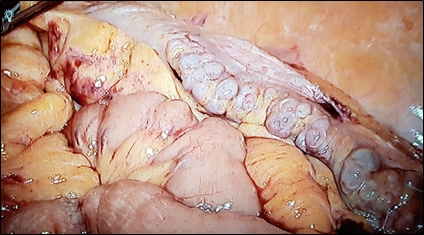
These results found an anatomical counterpart, as elegantly highlighted by the studies conducted by Dorothea Lieberman-Meiffert and Hubert J. Stein20,21. The research hypothesis was developed based on observations of radial asymmetry in LOS pressures, which suggested the presence of two distinct muscle units contributing to the LOS in humans: the gastric sling (Figure 1A) located at the greater curvature and the semicircular clasps (Figure 1B) positioned at the lesser curvature side of the gastroesophageal junction. While evidence of their correlation with the manometric HPZ has been established in cats, such evidence was lacking in humans. To address this gap, they conducted comparisons between the manometric pressure profile and the thickness and architecture of muscular layers at the human gastroesophageal junction using advanced techniques such as three-dimensional (3D) computerized manometric imaging and microdissection studies. They demonstrated that the essential component of the HPZ resides at the oesophagogastric junction, where semicircular muscle fibres, known as semicircular clasps, attach to the proximal part of the lesser gastric curvature and intersect perpendicularly with the gastric fundus sling fibres. Interestingly, they provided morphological and physiological insights into the length and location of surgical myotomy of the LOS. A limited myotomy of the clasp fibres at the lesser curvature side of the oesophagogastric junction would alleviate oesophageal outflow obstruction but might not entirely eliminate cardiac competence, due to the continued function of the sling fibres. While this approach may not require the addition of an antireflux procedure, some patients may still experience persistent dysphagia post-surgery. Conversely, extending the myotomy onto the stomach and dividing both the gastric sling fibres and clasps would eliminate any obstruction at the oesophagogastric junction but would also completely disrupt the antireflux barrier. Therefore, an antireflux procedure would be warranted in such cases.
Figure 1. Anatomical details of clasp (A) and sling (B) fibres from robotic Heller myotomy.
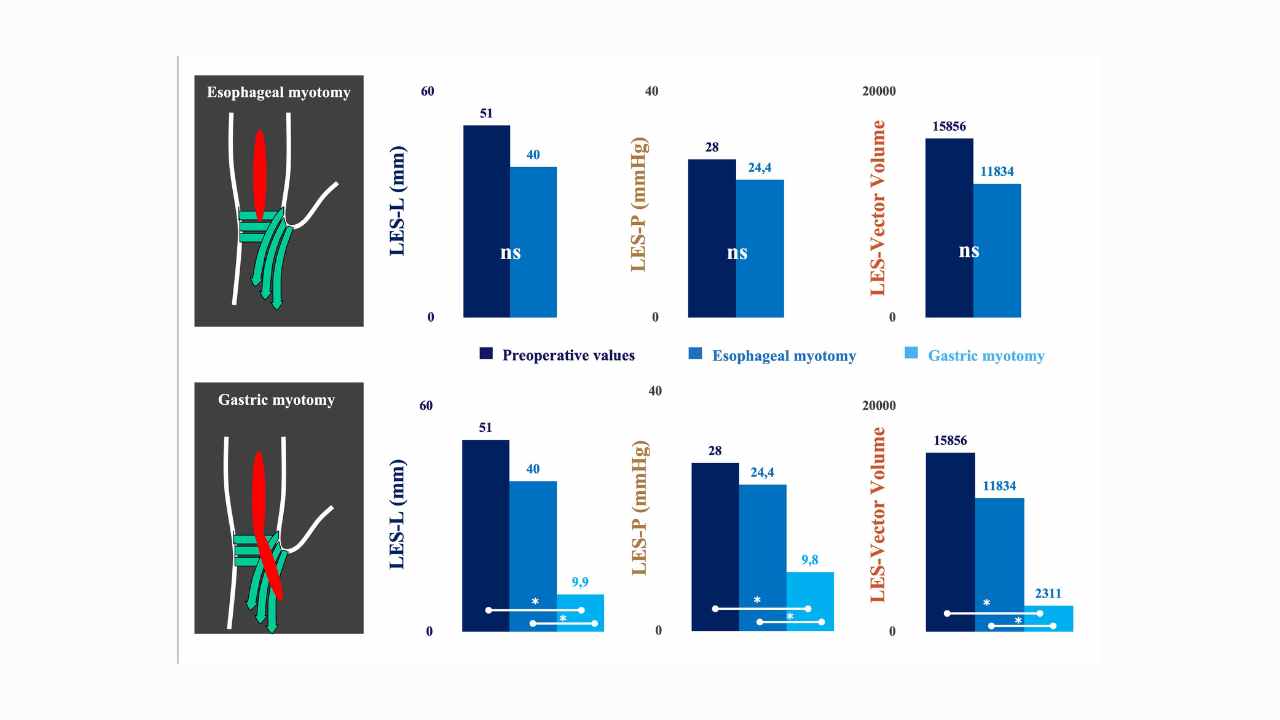
The validity of these findings has been supported by a subsequent experimental study from our group involving pigs, which was conducted in collaboration with the Experimental Surgery Department at the University of Amsterdam22. Based on Bombeck’s hypothesis using intraoperative computerized manometry23, our experimental investigation revealed that performing a myotomy solely on the oesophageal portion of the LOS, without dissecting the gastric fibres, did not alter the parameters under consideration. However, dissection of the gastric fibres for a minimum of 2-3 cm along the anterior gastric wall significantly altered the LOS pressure profile. These findings further elucidated the significant role of gastric fibres in maintaining the sphincteric HPZ, supporting the need to conduct a comprehensive myotomy to diminish the likelihood of recurrent dysphagia resulting from inadequate treatment (Figure 2).
Figure 2. Variations in intraoperative LOS length, pressure, and vector volume across different surgical phases (preoperative, esophageal myotomy, gastric myotomy) in animal models. LOS, Lower oesophageal sphincter; L, length; P, Pressure; NS, not significant; * p<0.05.
Subsequently, transitioning from experimental to clinical study settings, we studied a total of 105 patients diagnosed with achalasia, to assess the alterations induced by calibrated laparoscopic Heller myotomy at the oesophago-gastric junction on the LOS pressure profile, using a computerized manometric system24. The collective average of preoperative pressure peaks and length among all patients was 37.7 ± 6.42 mmHg and 51.17 ± 3.43 mm, respectively, with a vector volume (VV) of 15764 ± 1641. Following oesophageal mobilization and partial myotomy, there were no statistically significant modifications in pressure (mean end-expiratory [ME] 29.7 ± 7.21 mmHg, peak maximum [PM] 36.14 ± 6.32 mmHg), indicating an overall decrease of 21.3%, as well as in length (ME 47.17 ± 3.25 mm, PM 42.41 ± 3.12 mm) and VV (ME 13895 ± 1526, PM 14123 ± 1342). On completion of total myotomy, LOS pressure decreased significantly to 2.4 ± 1.3 mmHg (p < 0.05), marking a substantial reduction of 91.9% in comparison to preoperative values (Figure 3).
Figure 3. Variations in Intraoperative LOS pressure across different surgical phases (preoperative, oesophageal myotomy, gastric myotomy) in patients submitted to laparoscopic Heller myotomy. LOS, lower oesophageal sphincter; P, Pressure; ns, not significant; * p<0.05.
Conclusion
In conclusion, our journey from experimental investigations to the operating theatre underscores the pivotal role of research in refining surgical approaches for oesophageal achalasia. Through meticulous analysis of both experimental and clinical data, we have illuminated the importance of calibrated and personalized treatment strategies in achieving optimal patient outcomes. Our findings reinforce the imperative of performing comprehensive myotomies, as demonstrated by intraoperative manometry, to mitigate the risk of recurrent dysphagia postoperatively. Moreover, our investigation highlights the significance of anatomical considerations, emphasizing the need for a detailed approach that accounts for individual patient characteristics. By bridging the gap between experimental evidence and real-world application, we advocate the adoption of tailored oesophago-gastric myotomy, extending 5-6 cm with a proximal extension of 2-2.5 cm above the Z-line and a distal extension of 3-3.5 cm below the same landmark. This approach reflects the evolution of surgical management, characterized by precision, adaptability, and a commitment to optimizing patient care. Ultimately, our study underscores the transformative impact of research-driven advancements, ushering in a new era of personalized treatment for oesophageal achalasia.
References
Ribolsi M, Andrisani G, Di Matteo FM, Cicala M. Achalasia, from diagnosis to treatment. Expert Rev Gastroenterol Hepatol. Taylor and Francis Ltd.; 2023; 17: 21–30.
Pandolfino JE, Gawron AJ. Achalasia: a systematic review. JAMA [Internet]. JAMA; 2015 May 12 [cited 2024 Feb 7]; 313: 1841–1852. Available from: https://pubmed.ncbi.nlm.nih.gov/25965233/
Tuason J, Inoue H. Current status of achalasia management: a review on diagnosis and treatment. J Gastroenterol [Internet]. J Gastroenterol; 2017 Apr 1 [cited 2024 Feb 7]; 52: 401–406. Available from: https://pubmed.ncbi.nlm.nih.gov/28188367/
Vaezi MF, Pandolfino JE, Vela MF. ACG clinical guideline: diagnosis and management of achalasia. Am J Gastroenterol [Internet]. Am J Gastroenterol; 2013 Aug [cited 2024 Feb 7]; 108: 1238–1249. Available from: https://pubmed.ncbi.nlm.nih.gov/23877351/
Marano L, Pallabazzer G, Solito B, Santi S, Pigazzi A, De R, et al. Surgery or Peroral Esophageal Myotomy for Achalasia: A Systematic Review and Meta-Analysis. Medicine [Internet]. Medicine (Baltimore); 2016 Mar 4 [cited 2024 Feb 7]; 95. Available from: https://pubmed.ncbi.nlm.nih.gov/26962813/
Holmstrom AL, Campagna RJ, Carlson DA, Pandolfino JE, Soper NJ, Hungness ES, et al. Comparison of preoperative, intraoperative, and follow-up functional luminal imaging probe measurements in patients undergoing myotomy for achalasia. Gastrointest Endosc [Internet]. Gastrointest Endosc; 2021 Sep 1 [cited 2024 Feb 7]; 94: 509–514. Available from: https://pubmed.ncbi.nlm.nih.gov/33662363/
Teitelbaum EN, Soper NJ, Pandolfino JE, Kahrilas PJ, Hirano I, Boris L, et al. Esophagogastric junction distensibility measurements during Heller myotomy and POEM for achalasia predict postoperative symptomatic outcomes. Surg Endosc [Internet]. Surg Endosc; 2015 Mar 1 [cited 2024 Feb 7]; 29: 522–528. Available from: https://pubmed.ncbi.nlm.nih.gov/25055891/
Huffmanm LC, Pandalai PK, Boulton BJ, James L, Starnes SL, Reed MF, et al. Robotic Heller myotomy: a safe operation with higher postoperative quality-of-life indices. Surgery [Internet]. Surgery; 2007 Oct [cited 2024 Feb 7]; 142: 613–620. Available from: https://pubmed.ncbi.nlm.nih.gov/17950356/
Milito P, Siboni S, Lovece A, Andreatta E, Asti E, Bonavina L. Revisional Therapy for Recurrent Symptoms After Heller Myotomy for Achalasia. J Gastrointest Surg [Internet]. J Gastrointest Surg; 2022 Jan 1 [cited 2024 Feb 7]; 26: 64–69. Available from: https://pubmed.ncbi.nlm.nih.gov/34341888/
Moonen A, Annese V, Belmans A, Bredenoord AJ, Varannes SB Des, Costantini M, et al. Long-term results of the European achalasia trial: a multicentre randomised controlled trial comparing pneumatic dilation versus laparoscopic Heller myotomy. Gut [Internet]. Gut; 2016 May 1 [cited 2024 Feb 7]; 65: 732–739. Available from: https://pubmed.ncbi.nlm.nih.gov/26614104/
Ellis FH. Oesophagomyotomy for achalasia: a 22-year experience. Br J Surg [Internet]. Br J Surg; 1993 [cited 2024 Feb 7]; 80: 882–885. Available from: https://pubmed.ncbi.nlm.nih.gov/8369925/
Ellis FH, Gibb SP, Crozier RE. Esophagomyotomy for achalasia of the esophagus. Ann Surg [Internet]. Ann Surg; 1980 [cited 2024 Feb 7]; 192: 157–161. Available from: https://pubmed.ncbi.nlm.nih.gov/7406569/
Patti MG, Herbella FA. Achalasia and other esophageal motility disorders. J Gastrointest Surg [Internet]. J Gastrointest Surg; 2011 May [cited 2024 Feb 7]; 15: 703–707. Available from: https://pubmed.ncbi.nlm.nih.gov/21394546/
Patti MG, Pellegrini CA, Horgan S, Arcerito M, Omelanczuk P, Tamburini A, et al. Minimally invasive surgery for achalasia: an 8-year experience with 168 patients. Ann Surg [Internet]. Ann Surg; 1999 Oct [cited 2024 Feb 7]; 230: 587–594. Available from: https://pubmed.ncbi.nlm.nih.gov/10522728/
Campos GM, Vittinghoff E, Rabl C, Takata M, Gadenstätter M, Lin F, et al. Endoscopic and surgical treatments for achalasia: a systematic review and meta-analysis. Ann Surg [Internet]. Ann Surg; 2009 Jan [cited 2024 Feb 7]; 249: 45–57. Available from: https://pubmed.ncbi.nlm.nih.gov/19106675/
Rossetti G, Brusciano L, Amato G, Maffettone V, Napolitano V, Russo G, et al. A total fundoplication is not an obstacle to esophageal emptying after heller myotomy for achalasia: results of a long-term follow up. Ann Surg [Internet]. Ann Surg; 2005 Apr [cited 2024 Feb 7]; 241: 614–621. Available from: https://pubmed.ncbi.nlm.nih.gov/15798463/
Del Genio A, Izzo G, Di Martino N, Maffettone V, Landolfi V, Martella A, et al. Intraoperative esophageal manometry: our experience. Dis Esophagus [Internet]. Dis Esophagus; 1997 [cited 2024 Feb 7]; 10: 253–261. Available from: https://pubmed.ncbi.nlm.nih.gov/9455652/
Hill LD. Intraoperative measurement of lower esophageal sphincter pressure. J Thorac Cardiovasc Surg. 1978; 75: 378–382.
Mattioli S, Pilotti V, Felice V, Di Simone MP, D’Ovidio F, Gozzetti G. Intraoperative study on the relationship between the lower esophageal sphincter pressure and the muscular components of the gastro-esophageal junction in achalasic patients. Ann Surg [Internet]. Ann Surg; 1993 [cited 2024 Feb 7]; 218: 635–639. Available from: https://pubmed.ncbi.nlm.nih.gov/8239778/
Stein H, Korn O, Liebermann-Meffert D. Manometric vector volume analysis to assess lower esophageal sphincter function. Ann Chir Gynaecol . 1995; 84: 151–158.
Stein HJ, Liebermann-Meffert D, DeMeester TR, Siewert JR. Three-dimensional pressure image and muscular structure of the human lower esophageal sphincter. Surgery [Internet]. Surgery; 1995 [cited 2024 Feb 7]; 117: 692–698. Available from: https://pubmed.ncbi.nlm.nih.gov/7778032/
Di Martino N, Monaco L, Izzo G, Cosenza A, Torelli F, Basciotti A, et al. The effect of esophageal myotomy and myectomy on the lower esophageal sphincter pressure profile: intraoperative computerized manometry study. Diseases of the Esophagus [Internet]. 2005 [cited 2024 Feb 7]; 18: 160–165. Available from: https://academic.oup.com/dote/article/18/3/160/2419626
Bombeck CT, Vaz O, DeSalvo J, Donahue PE, Nyhus LM. Computerized axial manometry of the esophagus. A new method for the assessment of antireflux operations. Ann Surg [Internet]. Ann Surg; 1987 [cited 2024 Feb 7]; 206: 465–472. Available from: https://pubmed.ncbi.nlm.nih.gov/3662658/
Di Martino N, Marano L, Torelli F, Schettino M, Porfidia R, Reda G, et al. The calibrated laparoscopic Heller myotomy with fundoplication. Ann Ital Chir. 2013; 84: 19–24.


.png)





.jpg)