
BJS-2025-0573
Young BJS
General
Not the scale, but the significance
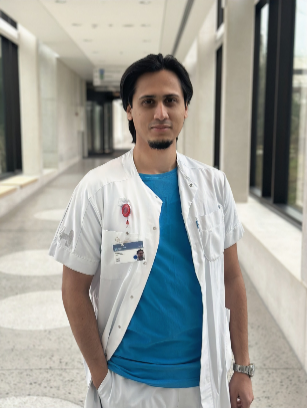
Talha Malik
Senior Surgical Resident & PhD fellow; Department of Surgery, Slagelse Hospital, Region Zealand, Denmark
26112025
During surgical training, many imagine the most rewarding days to be tied to complex, high-stakes operations. Yet, in my third year as a trainee at Rigshospitalet in Copenhagen, Denmark, the case that left the deepest impression on me was not glamorous—it was about saving a single testicle.
During my on-call shift, I received a call from a peripheral hospital 150 km away. A 3-year-old boy had been admitted there earlier with scrotal pain, diagnosed with a urinary tract infection, and discharged. Seven hours later he returned, inconsolable, with worsening pain. The on-call surgeon strongly suspected testicular torsion and requested an immediate transfer to our center.
By the time the boy arrived, almost twelve hours had passed since the first symptoms. His parents were visibly anxious and had many questions, fearing the worst for their son: Would he lose his testicle, and what implications would that have for his future—socially, sexually, and in terms of fertility? Their worry was amplified by the fact that he was their only child, conceived after five years of fertility treatment, which added extra weight to their fears.
I explained that an exploratory surgery was necessary to assess the viability of the testicle, and with a heavy heart I also had to inform them of the worst-case scenario; that an orchiectomy (removal of the testis) might be required.
On exploration, the testis was found to be rotated twice on its axis, with clear discoloration and congestion. Carefully, I untwisted it and placed it in a warm saline bath. Then we waited. Every minute felt stretched, as the team watched silently for a sign of recovery. Slowly, almost imperceptibly at first, color began to return. Within fifteen minutes, the dusky surface started to turn pink again. The room collectively exhaled, and one nurse even whispered a celebratory “woo-hoo.” My attending, consulted via video call, confirmed that the testis was viable. We secured it in place to prevent recurrence and closed.
I couldn’t help stepping out of the operating room with a smile on my face to greet the parents. I explained that their son’s testis had been saved. The mother broke down in tears, overwhelmed with relief, while the father repeated his thanks again and again. It was an outpouring of gratitude that I will never forget.
That night, I reflected on how often we chase mastery of complex, headline-worthy procedures. But sometimes it is these smaller, almost routine operations that hold the most meaning. For this boy, the difference was immense. For his parents, it was their greatest relief. And for me, it was a reminder that the true reward in surgery lies not in the scale of the operation, but in its impact on the lives we touch.
My utmost gratitude goes to the paramedics, the nurses and anesthesiology team, whose dedication and seamless efforts carried us through and made this outcome possible.



.png)





.jpg)

