BJS Academy>Surgical trials>PROTECT: a national ...
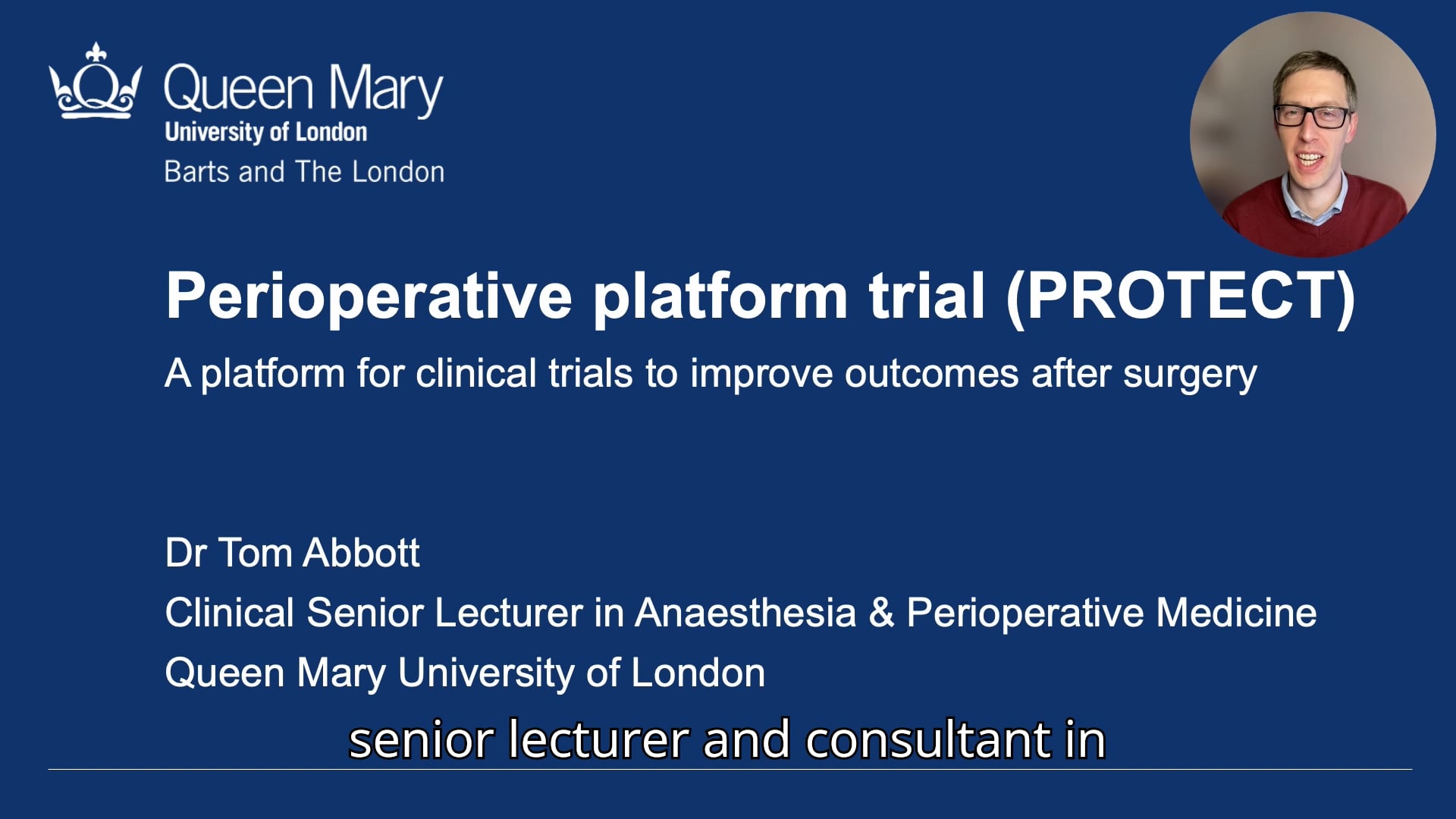
PROTECT: a national perioperative platform trial to improve surgical outcomes
16 December 2025
Trials General
Related articles

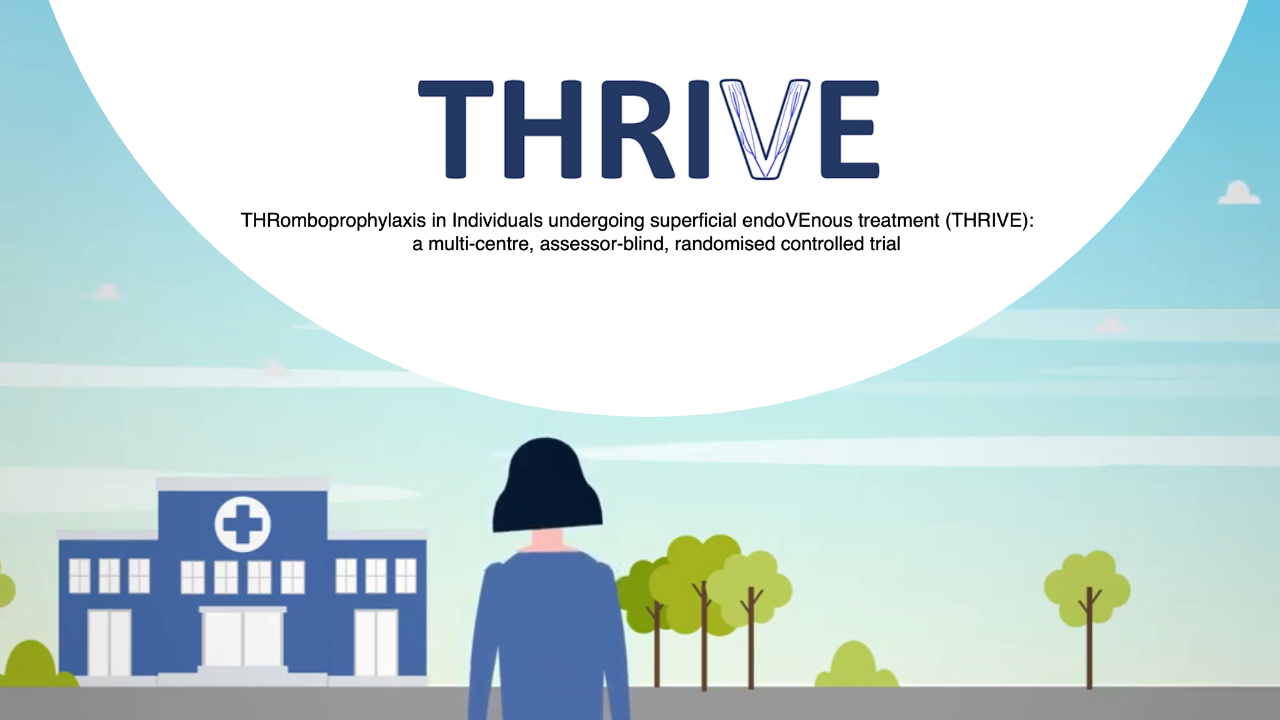
THRIVE Trial: Advancing Thromboprophylaxis in Superficial Venous Intervention
Sarah Whittley
Superficial venous intervention has transformed the treatment of varicose veins, offering patients minimally invasive solutions with excellent short-term outcomes. Yet, despite technical advances, an important question remains unresolved: Should pharmacological thromboprophylaxis be routinely prescribed to prevent postoperative deep vein thrombosis (DVT)?
The THRIVE trial (THRomboprophylaxis In superficial endovenous interVEntion) is the first randomised controlled study designed to address this uncertainty.1 By generating robust clinical evidence, THRIVE has the potential to influence international practice and shape future guideline recommendations.
Varicose veins are common, affecting up to 45% of the UK population and are associated with reduced physical and mental health-related quality of life.2,3 Symptomatic varicose veins are now routinely treated with endovenous thermal ablation, non-thermal ablation or mechanochemical techniques.4 While effective, these procedures carry a recognised risk of venous thromboembolism (VTE).

Closing the treatment gap in knee osteoarthritis — the GEKO trial begins
Dr Raman Uberoi, Dr Anjali Shah, Dr Bhavisha Patel, Dr Loretta Davies, Professor Andrew Price, GEKO study group
Knee osteoarthritis is one of the most common musculoskeletal conditions, affecting almost one in five people over the age of 45 in the UK — around 4 million people. For many, it means living with chronic pain, limited mobility, and a gradual decline in quality of life. At its most severe, the only effective option is knee replacement surgery.
But what about those who aren’t yet at that stage? Despite trying physiotherapy, anti-inflammatories, and combinations of painkillers, many patients remain stuck in a treatment gap. Their pain is poorly controlled, yet surgery is not an option.
A new approach — genicular artery embolisation (GAE) — might offer hope. The procedure blocks small blood vessels around the knee that are thought to drive inflammation and pain. Early studies have hinted at benefit, but the evidence so far is mixed: one small trial showed no improvement, while another found a modest reduction in pain. Despite this uncertainty, the technique is already being used internationally.
The NEON trial: nerve repair vs. alignment for digital nerve injuries
Justin C R Wormald, MRCS, DPhil
The NEON (Nerve rEpair Or Not) trial is a randomized controlled trial investigating whether microsurgical suture repair provides benefits over simple nerve alignment for digital nerve injuries—one of the most common nerve injuries requiring surgical treatment.1 Digital nerve injuries affect approximately 3,000 patients annually in the UK, typically caused by sharp lacerations to fingers.2 Standard treatment involves specialist referral and direct suture repair under microscope magnification. However, prior to NEON, no randomized trials had compared suture repair to non-repair approaches, with existing evidence limited to small, biased observational studies.3
This multicentre trial randomized 122 adult patients with suspected unilateral digital nerve injuries across 17 NHS hospitals. After surgical exploration confirmed nerve division, participants were randomized 1:1 to either:
Microsurgical suture repair: Nerve ends aligned and sutured under magnification
Copied!
Connect

Copyright © 2025 River Valley Technologies Limited. All rights reserved.


.jpg)