
BJS-2025-0383
Surgical news
General
Guest blog
A view from the coffee room...How to retire gracefully: 10 commandments for surgeons
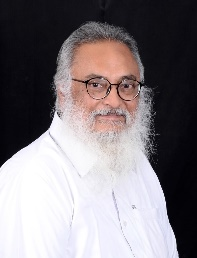
Dhananjaya Sharma, MBBS, MS, PhD, DSc, FRCS, FCLS (Hon), FRCST (Hon)
Honorary Member Académie Nationale de Chirurgie France Head, Department of Surgery, Government NSCB Medical College, Jabalpur (MP) India
30042025
Retirement is a major transition for any professional, but for surgeons, it is particularly complex. The identity, purpose and intense commitment associated with surgical practice make stepping away from the operating room both a psychological and logistical challenge. To ensure a smooth transition, surgeons must plan their exit strategy. Here are 10 commandments for retiring gracefully from surgical practice:
1. Start planning early
The key to a seamless retirement is early and thoughtful planning. Ideally, this process should begin 5–10 years before retirement. This period allows time for assessment of financial security, professional succession planning, and gradual disengagement from clinical duties. Developing a timeline ensures that retirement is a proactive decision rather than a reactive necessity due to declining health or external pressures. Such planning is the key to a graceful landing in the post-retirement life.
2. Secure financial independence
Financial security is crucial to a stress-free retirement. Surgeons should work with financial planners to evaluate their savings, investments and retirement benefits. Diversifying income sources—such as pensions, savings, and passive investments—ensures stability.1It is also wise to consider medical insurance coverage post-retirement, and planning to safeguard wealth for future generations.
3. Know when to slow down
This one is by far the most important commandment and merits maximum consideration.
Professor Michael DeBakey was regularly performing open-heart surgery and operated on Russian President Boris Yeltsin at the age of 88.2 An occasional publication shows that patients treated by surgeons over 65 years old had 7% lower odds of lower rates of 30-day mortality, readmission or complications compared with those treated by younger surgeons, regardless of surgical specialties, emergency or elective procedures.3 But these are anecdotal exceptions. Even if decision-making remains sharp; age inevitably affects stamina, cognition, vision and dexterity; and the paradox of greater experience but worse clinical/operative performance is unfortunately true.4,5 Burnout related to patient expectations, societal and medicolegal pressure can also adversely affect an aging surgeon’s performance. Hence, recognizing when to step back from high-intensity surgery is vital.6,7 Struggles related to newer techniques are well known as the old adage of ‘it is difficult to teach old dogs new tricks’ holds true. A glittering career should not end with a damp squib of all round criticism of one’s waning skills. Unfortunately, the awareness of recognizing one’s diminishing skills has been a well-known challenge since the time of William Osler.8
A self-assessment, combined with peer feedback, can help a surgeon determine the right time to retire. An experienced anaesthetist colleague or a scrub nurse who has worked with you closely may also provide valuable insights into when your skills begin to decline.9 Standard retirement policies in accordance with age-related surgical ability are lacking in most countries around the world. It is reasonable to have mandatory cognitive and psychomotor testing and regular reviews of operating privileges starting at the age of 65 years; and even earlier in cases of negative health events and serious performance concerns. For an aging surgeon, embracing proactive self-regulation is not just a mark of professionalism, it is a pathway to preserving dignity and autonomy, far preferable to the indignity of stricter, externally imposed regulations by hospitals or governments.10-13 An aging surgeon should not mind such evaluations as such measures prioritise patient safety while also affirming their own commitment to maintaining the highest standards of care and skill in their profession. Moreover, this is standard practice in aviation, where pilots well below the maximum allowable age undergo regular medical evaluations and performance assessments to ensure they maintain a safe level of proficiency. This approach has drawn significant inspiration for surgical training, particularly in adopting structured assessments and simulations to enhance safety and skill retention.6
It is also worth remembering that it is better to be asked ‘why are you retiring rather than why you are not retiring!’
4. Pass the reins gracefully
A key component of retiring honorably is preparing successors. Identifying and mentoring younger colleagues ensures continuity of patient care and surgical excellence. Gradually reducing surgical caseloads, handing over complex cases, transitioning leadership responsibilities and shifting to mentorship roles can help in a smooth transition. Guiding the next generation fosters goodwill and secures one’s legacy in the profession.
5. Maintain an academic and advisory role
Retirement does not mean abandoning the field entirely. Many retired surgeons find immense satisfaction in teaching, training, and research, administrative and advisory roles. Becoming involved in academic institutions, national surgical associations, formulating guidelines and policies, editorial and reviewing obligation for journals or participating in hospital ethics committees can provide a fulfilling post-clinical career.
6. Adjust expectations from successors
One common mistake retiring surgeons make is expecting their successors to work and think exactly as they did. Medical science is evolving rapidly, and younger surgeons may approach patient care and surgical techniques differently. Accepting and respecting their perspectives rather than resisting change ensures a positive relationship between outgoing and incoming professionals. It is a relay race; once you pass the baton, your role shifts to being a cheerleader or at most, an adviser. Even then, advice should be offered only when sought, and without resentment if it isn’t followed.
7. Strengthen personal and family bonds
Surgical careers demand intense dedication, often at the cost of family time.14 Retirement is an opportunity to rebuild and strengthen family relationships. Spending quality time with family and making up for lost moments can bring immense personal fulfillment.
8. Develop hobbies and interests outside surgery
Many surgeons struggle with a loss of identity post-retirement. Having hobbies and passions outside of surgery such as music, writing, gardening, or volunteering provides a sense of purpose and keeps the mind engaged. These activities help make the transition smoother and more rewarding.
9. Stay physically and mentally active
Retirement should not mean inactivity. Regular physical exercise, mental stimulation through reading or puzzles, and social engagement are essential for long-term well-being. Joining fitness groups, engaging in meditation or taking part in community initiatives can contribute to a healthy and balanced retirement.
10. Leave a lasting legacy
Retirement is not just an end but a beginning of a new phase where surgeons can solidify their legacy. Writing memoirs, establishing scholarships, mentoring young professionals, and contributing to surgical policy-making are meaningful ways to leave an enduring impact on the field.
11. Get the most out of a retiring surgeon
The 11th Commandment is not for the retiring surgeon but for society and medical institutions.
Society benefits immensely when aging surgeons remain engaged, leveraging their decades of accumulated wisdom to mentor younger colleagues, contribute to institutional growth, and enrich philanthropic global health/surgery initiatives. While clinical performance may decline with age, the value of their experience, perspective, and professional identity remains unparalleled. Medical institutions and society must foster innovative, flexible retirement models that honour their contributions, support transitions, and provide meaningful opportunities for their continued involvement, ensuring that the legacy of old surgeons strengthens the future of surgery rather than them simply fading away.15-18
Conclusion
Retirement is not the end of a surgeon’s journey but rather a transformation into a new role that continues to influence the profession and society. By following these 10 commandments, surgeons can retire with dignity, ensuring both personal satisfaction and professional continuity. A well-planned retirement allows surgeons to enjoy their achievements while embracing new opportunities beyond the operating room.
References
Turin SY, Fine P, Fine N. Wealth Management and Retirement. Plast Reconstr Surg. 2022 Feb 1;149(2):323e-332e. doi: 10.1097/PRS.0000000000008790.
Buccimazza I. When should surgeons retire? S Afr J Surg. 2016 Nov;54(4):3-4. PMID: 28272847.
Satkunasivam R, Klaassen Z, Ravi B, Fok KH, Menser T, Kash B, et al. Relation between surgeon age and postoperative outcomes: a population-based cohort study. CMAJ. 2020 Apr 14;192(15):E385-E392. doi: 10.1503/cmaj.190820.
Waljee JF, Greenfield LJ, Dimick JB, Birkmeyer JD. Surgeon age and operative mortality in the United States. Ann Surg. 2006 Sep;244(3):353-62. doi: 10.1097/01.sla.0000234803.11991.6d.
Schenarts PJ, Cemaj S. The Aging Surgeon: Implications for the Workforce, the Surgeon, and the Patient. Surg Clin North Am. 2016 Feb;96(1):129-38. doi: 10.1016/j.suc.2015.09.009.
Blasier RB. The problem of the aging surgeon: when surgeon age becomes a surgical risk factor. Clin Orthop Relat Res. 2009 Feb;467(2):402-11. doi: 10.1007/s11999-008-0587-7.
Asserson DB, Janis JE. The Aging Surgeon: Evidence and Experience. Aesthet Surg J. 2022 Jan 1;42(1):121-127. doi: 10.1093/asj/sjab145.
Katlic MR, Coleman J. The Aging Surgeon. Adv Surg. 2016 Sep;50(1):93-103. doi: 10.1016/j.yasu.2016.03.008.
Antunes MJ. The Age of The Surgeon: How Old Is Too Old? Acta Med Port. 2019 Jun 28;32(6):413-414. doi: 10.20344/amp.12160.
Bhatt NR, Morris M, O'Neil A, Gillis A, Ridgway PF. When should surgeons retire? Br J Surg. 2016 Jan;103(1):35-42. doi: 10.1002/bjs.9925.
Dellinger EP, Pellegrini CA, Gallagher TH. The Aging Physician and the Medical Profession: A Review. JAMA Surg. 2017 Oct 1;152(10):967-971. doi: 10.1001/jamasurg.2017.2342. PMID: 28724142.
Rosengart TK, Doherty G, Higgins R, Kibbe MR, Mosenthal AC. Transition Planning for the Senior Surgeon: Guidance and Recommendations From the Society of Surgical Chairs. JAMA Surg. 2019 Jul 1;154(7):647-653. doi: 10.1001/jamasurg.2019.1159.
Waters PM, Williams D. Later in Career Surgeon Performance Assessment: Why, When, What, and by Whom. J Pediatr Orthop. 2021 May-Jun 01;41(5):322-326. doi: 10.1097/BPO.0000000000001795.
Stolarski A, Moseley JM, O'Neal P, Whang E, Kristo G. Retired Surgeons' Reflections on Their Careers. JAMA Surg. 2020 Apr 1;155(4):359-361. doi: 10.1001/jamasurg.2019.5476.
Goldman BS. The surgeon's dilemma--retirement. Pacing Clin Electrophysiol. 2005 May;28(5):444-5. doi: 10.1111/j.1540-8159.2005.09204.x.
Pannor Silver M, Easty LK. Planning for retirement from medicine: a mixed-methods study. CMAJ Open. 2017 Feb 13;5(1):E123-E129. doi: 10.9778/cmajo.20160133.
Rosengart TK, Doherty G, Higgins R, Kibbe MR, Mosenthal AC. Transition Planning for the Senior Surgeon: Guidance and Recommendations From the Society of Surgical Chairs. JAMA Surg. 2019 Jul 1;154:647-653. doi: 10.1001/jamasurg.2019.1159.
Drew SJ, Halpern LR. The Aging Surgeon Cohort: Their Impact on the Future of the Specialty. Oral Maxillofac Surg Clin North Am. 2022 Nov;34:593-601. doi: 10.1016/j.coms.2022.02.005.




.png)





.jpg)

