
BJS-2025-0424
Surgical news
General
Guest blog
A view from the coffee room...Academic craving for praise: vanity or simple human nature?
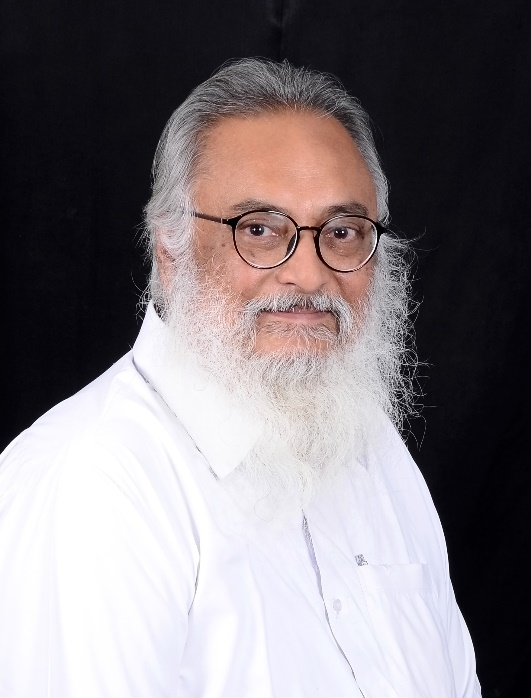
Dhananjaya Sharma, MBBS, MS, PhD, DSc, FRCS, FCLS (Hon), FRCST (Hon)
Honorary Member Académie Nationale de Chirurgie France Head, Department of Surgery, Government NSCB Medical College, Jabalpur (MP) India
30062025
The pursuit of knowledge, often heralded as the noblest of human endeavours, occupies a paradoxical space in academia. On one hand, it is driven by curiosity, the desire to uncover truths about the world, and the betterment of society. On the other hand, it is inextricably tied to recognition - a longing for accolades, titles and applause. This craving for praise, manifesting through the relentless chase for honours and awards, raises a question: is it vanity or an intrinsic aspect of human nature?
The psychology of recognition
Humans are fundamentally social beings and Psychologists have long established that recognition and validation play critical roles in shaping self-esteem and motivation. Abraham Maslow, in his hierarchy of needs, placed esteem, including respect and recognition, just below self-actualization1. Academics’ work often unfolds in the solitary realms of research and contemplation, such external validation provides a tangible acknowledgment of their contributions.
The thin line between vanity and nature
Vanity implies excessive pride in one’s achievements or appearance. Philosophers such as David Hume cautioned against vanity, labelling it a weakness that detracts from genuine intellectual pursuits: “A man’s vanity is more fragile than his virtue”, suggesting that the desire for praise often corrupts the purity of one’s motives.
Pride, one of the seven cardinal sins, often intertwines with vanity in complex ways. Unlike healthy self-respect, excessive pride blinds individuals to their flaws and fosters a sense of superiority. In academia, this can lead to a refusal to acknowledge errors, an inflated sense of importance, and a corrosive competition that undermines collective progress. This can turn the pursuit of knowledge into an exercise in self-glorification.
But, rewards and honours are not merely personal trophies but are the currency of the academic world; this muddies the waters between personal ambition and professional necessity.
Historical context: A tradition of laudation
The tradition of bestowing honours upon scholars is far from a modern invention. From ancient Greece to the Renaissance, and more recently Nobel Prizes exemplify this tradition. Such historical precedents suggest that the craving for praise is deeply rooted in the very fabric of intellectual history. This does not absolve individuals of vanity but contextualizes it within a broader human tendency to celebrate and be celebrated.
The modern obsession with metrics
The advent of global ranking systems, citation indices and impact factors has added a quantitative veneer to the qualitative pursuit of knowledge. In this metric-driven environment, honours and awards become visible proxies for academic worth and excellence. Aristotle was the first to elaborate on the distinction between the vita activa and the vita contemplativa and warned against the dominance of outward recognition over inward reflection.
The dangers of academic narcissism
When the pursuit of honours becomes an end in itself, it risks fostering a culture of academic hubristic narcissism. Scholars may prioritize popular or fashionable topics over critical foundational, but less glamorous research.
Practical solutions:
Redefining success. Institutions and academic societies must emphasize the intrinsic value of research and collaborative interdisciplinary work over its capacity to win awards.
Fostering humility. Mentors should instill humility in young scholars, teaching them to view honours as milestones rather than endpoints2. Sharing stories of unsung heroes in academia can provide a counter-narrative to the culture of excessive praise.
Decoupling metrics from recognition. Metrics should not overshadow the qualitative aspects of academic work. Peer reviews, community impact and ethical considerations must regain their rightful place in evaluations.
Promoting internal reflection. Honest self-assessment can help academics navigate the fine line between ambition and vanity. Dr Thomas Starzl, widely regarded as the father of modern transplantation, reflects in his autobiography on receiving awards in his later years: “When recognition comes to young men, it nourishes them like drops of gentle rain. With the burden of memories toward the end, honors can be like hailstones”3. Accolades must be viewed as moments for reflection, for transformative meaningful work rather than self-glorification.
Conclusion
The academic craving for praise is a complex interplay of individual psychology, institutional frameworks and historical traditions. While the pursuit of recognition can inspire greatness, it also risks diverting attention from the deeper purpose of academia. By fostering a culture that values humility, collaboration and intrinsic motivation, craving for praise can be transformed from a potential vice into a virtuous cycle. Words of Rabindranath Tagore (Nobel laureate Literature 1913), I slept and dreamt that life was joy. I awoke and saw that life was service. I acted and behold, service was joy, remind us that the truest honours lie not in the applause of others but in the quiet fulfillment of a life lived in the service of the needy.
References
Maslow AH. A theory of human motivation. Psychological Review 1943; 50(4), 370–396. doi: 10.1037/h0054346.
Jaeck D. Ambition... and humility of the surgeons. Ann Surg. 2008 Dec;248(6):899-901. doi: 10.1097/SLA.0b013e318190edf7.
Starzl T. The Puzzle People: Memoirs of a Transplant Surgeon 1992. https://upittpress.org/books/9780822958369/




.png)





.jpg)

