
BJS-2025-0415
Surgical news
General
Guest Blog
A surgical life by James Shapiro
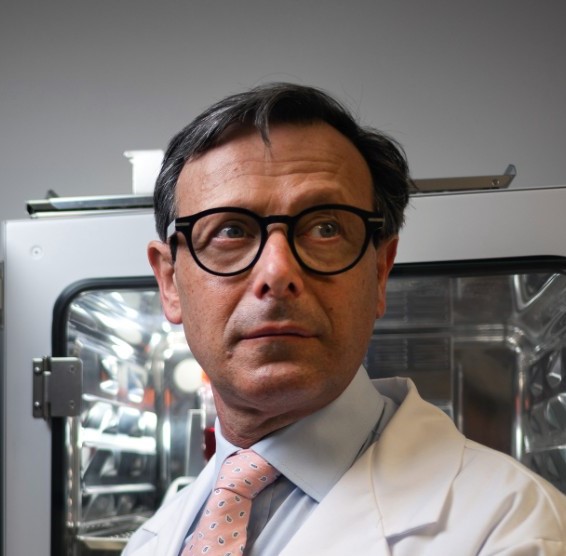
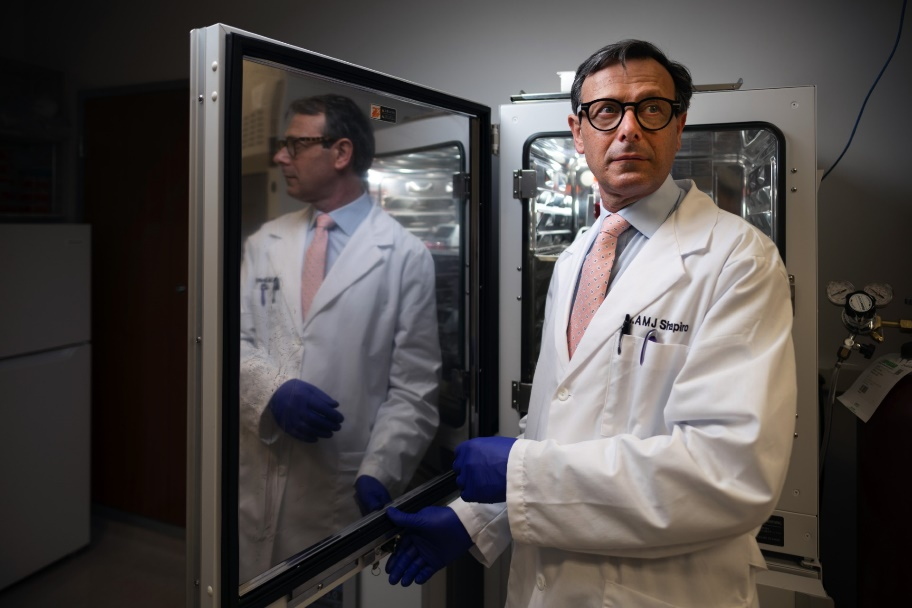
A.M. James Shapiro, MD PhD
Professor of Surgery, Medicine and Surgical Oncology; Canada Research Chair in Regenerative Medicine and Transplant Surgery; University of Alberta Hospitals
18062025
Who were your influences, and what were your training highlights?
I completed Medical School at the University of Newcastle-on-Tyne. My first taste of research was in islet transplantation. I knew I wanted to be a surgeon but it was super-competitive at the time. I was convinced I was not smart enough to get in, so several people advised me to think about a year of research to help me stand out. I went to see a surgeon called John Farndon who was a Consultant Surgeon and Senior Lecturer at the time. He had a long list of typed out projects. One caught my eye – islet transplants in rats, and the use of cryopreservation to alter immunogenicity. I had never seen a rat before, knew nothing about diabetes or cryopreservation, but signed up for a year’s research (B.Med.Sci.) project. I asked John if this was a good topic to pick. He told me he wouldn’t sell me a lemon! It set me on my path forward to today. I completed the one-year research project with John Farndon and Tom Lennard – both of whom later became Professors and Heads of Department in Bristol and Newcastle respectively. My initial islet experiments were all failures despite my working day and night (including sleeping in the animal house to monitor 24-hour glucoses from the rat tails).
I completed House Jobs at the Royal Victoria Infirmary in Newcastle and in Cambridgeshire, and in moving I had a small upright piano for sale. One evening I got a phone message from John Farndon saying “No, I don’t want to buy a bloody piano, but if you want a job in Bristol call me back!” I was an Anatomy Demonstrator in Bristol for a year, then applied to the junior (Senior House Officer, SHO) rotation in General Surgery – but did not get in (perhaps because John couldn’t make it to the interview). I was lucky enough to spend six months as an SHO in Urology which was great fun and provided early solid training in major retroperitoneal surgery. Finally, I was appointed to the SHO rotation in Bristol in General Surgery and completed the two-year training and an additional six months as a Registrar. I had a career advice meeting with John at one point – he told me to go to Canada to train in liver transplant surgery, and that I shouldn’t come back (more than a subliminal message that it was time to get rid of me)! Professor Derek Alderson had direct contacts with the Professor Norman Kneteman in Edmonton, Canada and one phone call set me on my way to Fellowship. I completed a two-year fellowship in liver transplant surgery in Edmonton, completed a Ph.D. in experimental surgery with Norman in models of islet transplantation (this time the experiments worked). The paediatric liver transplant surgeon in Edmonton left unexpectedly and they begged me to stay – where I have remained ever since. I completed a further two years of Chief Residency in General Surgery, during which time I was able to complete three additional 6-month Fellowships – in hepatobiliary oncologic surgery in Vancouver with Buz Scudamore, whole pancreas transplant surgery with Stephen Bartlett at the University of Maryland, and in living donor liver transplant surgery with Professor Koichi Tanaka in Kyoto. I joined the Faculty at the University of Alberta in 1998 and moved through the ranks to Full Professor and Canada Research Chair. I am now the Director of the liver transplant program where we perform around 110 liver transplantations per year, the living donor liver transplant program, and the islet transplant program, as well as over 300 major hepatobiliary operations per year.
Professor James Shapiro and his wife, Vanessa.
What made you decide to become a surgeon?
My father was a general practitioner (GP) working in an inner-city practice in Leeds. As a small child I used to sit with him in his clinic on a Saturday morning. He would hang his stethoscope round my neck, and patients would occasionally give me 50p coins as a tip! I didn’t find the ailment discussions very engaging at age four, but I became obsessed with the needles, syringes, scalpels, old ether anaesthetic mask in the glass cabinet, and a most intriguing wooden box which when opened contained a halothane vaporizer and a long run of corrugated black anesthetic tubing. I once sniffed at it and was terrified I would lose consciousness at once. Fortunately, nothing happened, except that my young brain became imprinted with surgery. My father had a close friend from medical school called Geoff Smiddy and somehow by aged sixteen I managed to persuade him to let me see some surgery. We went to a private hospital and I scrubbed in with Mr. F.G. Smiddy for the day. I still remember those cases clearly, a Sistrunk’s operation for thyroglossal cyst, a mastectomy for breast cancer and an open cholecystectomy. I struggled to release the Kelly clamps when instructed, managed to contaminate myself in the first few minutes of scrubbing, but as you can imagine there was no stopping my passion for surgery from that moment on. Geoff was a wonderful teacher and wrote a series of surgical textbooks that were most helpful for cramming for exams.
Tell me what you have learned from a surgical triumph or disaster
The easiest triumphs to recall are the young babies and small children that come in with liver failure and have their entire lives ahead of them to enjoy after a life-saving liver transplant. But just as easily come the risk of complications, leaks, occasional reoperations that in the next breath dash your pride. In my early years I would pat myself on the back for the tough challenging cases early on, but you soon learn that what matters most is the moment they go home. Rudyard Kipling had it right when he wrote “If you can meet Triumph and Disaster And treat those two imposters just the same.”
What was your proudest achievement?
Persistence in the face of failure and getting islet cell transplantation off the ground with the Edmonton Protocol is clearly a highlight of my career. The Edmonton Protocol was designed as a fail-safe belt-and-braces approach to deliver enough insulin producing islet cells, and to change to immunosuppressive treatment to one that was new, and not toxic to either the patient or the cells. When I wrote that protocol fewer than 9% of patients with type 1 diabetes were able to become insulin independent. I did not think it would work and that is why I went away to learn pancreas transplant surgery. When all 7 of the first treated patients were insulin free beyond a year, we knew we had something special. This was just a start, now almost 3,000 patients have received this treatment worldwide, and we have re-invigorated interest in designer stem cell islets that no longer rely on organ donors. If we could transplant these cells into children – without a need for powerful chronic immunosuppression, then on the shoulders of giants we will indeed have seen further. That day is yet to come.
Professor James Shapiro with his wife and two younger children.
What are your hobbies outside surgery?
I am passionate about photography and continue to learn about lighting techniques.
What advice would you give a young surgeon?
I would say follow your passion, know that the training phase can be daunting at times, but know that beyond training surgery provides the most satisfying and rewarding career. Never stop learning, always strive to be better, and the day you stop learning it’s time to stop.
What would you be, if you had not been a surgeon?
I would have been a photographer. I published my first book (photographs) at age eighteen and photography would definitely have been my thing.
Any regrets?
I naturally have regrets. I regret the unexpected surgical complications that keep you awake worrying at night. I regret in some ways working so hard earlier in my career. I have four older children that I had such short, precious time within their early years growing up. I regret writing telephone-directory size research grants during summer vacations that never got funded. I don’t regret taking my foot off the gas more recently and spending more family time with my wife and younger children.
.png)





.jpg)

