
Global Surgery has long been narrated from the North, with the Global South cast as its context rather than its co-author. This opinion piece reframes that relationship, asserting that authentic leadership must arise from the lived realities, moral imagination, and collective wisdom of the South. It proposes ten “commandments” for global surgical leadership, organized around three arcs of growth—leading self, leading others, and leading the systems. Each commandment distills reflections drawn from decades of work in resource-constrained settings, emphasizing service over status, collaboration over competition, and purpose over prestige. The manuscript argues that leadership from the South is not reactive defiance but constructive balance: grounded in reflection, resilience, and relevance. By championing independent knowledge ecosystems, nurturing inclusive mentorship, advocating through evidence, and celebrating frugal innovation as intellectual strength, this framework redefines what progress and integrity mean in global surgery. The paper concludes that the future of Global Surgery will depend on the South’s capacity not merely to contribute but to lead—transforming scarcity into strength and ownership into equity.
Normal View Dyslexic View
Leading from the South: 10 commandments for global surgery leadership
18 April 2026
Guest blog General
BJS-2026-0064
Cutting edge blog
General
Guest blog
Leading from the South: 10 commandments for global surgery leadership
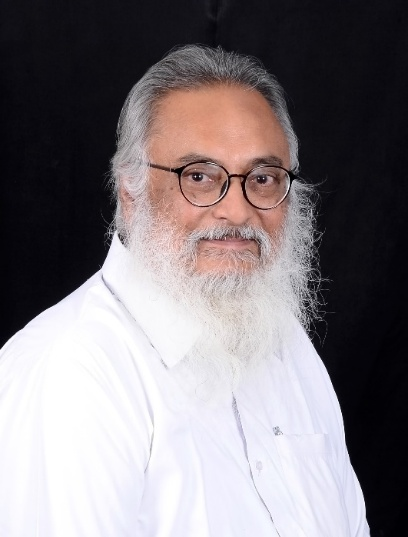
Dhananjaya Sharma, MBBS, MS, PhD, DSc, FRCS, FCLS (Hon), FRCST (Hon)
Honorary Member Académie Nationale de Chirurgie France Head, Department of Surgery, Government NSCB Medical College, Jabalpur (MP) India
18042026
Abstract
Global Surgery has long been narrated from the North, with the Global South cast as its context rather than its co-author. This opinion piece reframes that relationship, asserting that authentic leadership must arise from the lived realities, moral imagination, and collective wisdom of the South. It proposes ten “commandments” for global surgical leadership, organized around three arcs of growth—leading self, leading others, and leading the systems. Each commandment distills reflections drawn from decades of work in resource-constrained settings, emphasizing service over status, collaboration over competition, and purpose over prestige. The manuscript argues that leadership from the South is not reactive defiance but constructive balance: grounded in reflection, resilience, and relevance. By championing independent knowledge ecosystems, nurturing inclusive mentorship, advocating through evidence, and celebrating frugal innovation as intellectual strength, this framework redefines what progress and integrity mean in global surgery. The paper concludes that the future of Global Surgery will depend on the South’s capacity not merely to contribute but to lead—transforming scarcity into strength and ownership into equity.
Leading from the South: 10 commandments for global surgery leadership
For too long, the Global South has been spoken for, studied, and seen as the setting, not the author, of the surgical story. The time has come not just to participate in the global conversation, but to lead it — with authenticity rooted in lived experience, moral mandate and the practical wisdom. Leadership here does not mean position or power; it means the ability to imagine differently, convene wisely, and act collectively. Such leadership in Global Surgery is not conferred by position or credential; it is lived, learned, and often earned through persistence in the face of scarcity, guided by empathy, and shaped by adaptation with ingenuity and purpose. Leadership from the South is not an act of imitation or defiance against the North; it is an act of balance. It seeks not dominance, but dignity. It calls for our realities, solutions, and voices to shape the global narrative of surgery—anchored not in rhetoric but in reflection, resilience, and relevance. It must be a movement that values collaboration over competition, humility over hierarchy, and purpose over prestige1. Leadership from the Global South brings the much-needed virtues of resilience—the art of leading amid scarcity, relational intelligence—collaborating across institutions and hierarchies, cultural humility—navigating multilingual and multicultural realities, and moral imagination—transforming empathy into systems thinking. The South does not lead in spite of scarcity—it leads because it has mastered survival within it.
These Ten Commandments are not rules carved in stone, but reflections distilled from a lifetime of walking on this road. They are offered as a compass, not a code, to those who wish to lead with both mind and heart. They are meant to guide and inspire the next generation of global surgical leaders.
Act I. The inner journey — leading self
1. Decolonize your own mind — but don’t become a proxy colonizer
The first step in leadership is the most private one, it begins in the mirror, begins with serious introspection. Before we challenge global hierarchies, we must interrogate the ones within us. Too often, we unconsciously measure ourselves by Western metrics — citation counts, impact factors, or the accent of authority. True decolonization begins when we stop seeking validation through such borrowed mirrors. But beware the opposite trap — of becoming a local colonizer, reproducing the same hierarchies we once resisted: urban over rural, senior over junior, English-speaking over vernacular voices2-4. Liberation without empathy becomes imitation. True leadership is not about hoarding the power; it is about democratizing and diffusing it to empower others.
2. Anchor leadership in service, not status
True leadership means serving not ruling. Titles and fellowships are transient; service is enduring. Some of the most transformative leaders never held grand offices; they taught quietly, operated tirelessly, and built systems that outlasted them. Leadership in the South has its ethical centre — to serve, and to serve better. When your students, patients, and colleagues sense that your motivation is service, not spotlight, they will follow your example long after they forget your words.
3. Do meaningful research that makes a difference
The true frontier of surgical science is not in high-tech labs, but in low-resource wards where need meets ingenuity5. Leadership in Global Surgery is built not on publication counts but on purpose. Ask questions that emerge from the bedside, not the bibliography; a good question born out of local realities will always be more important than a borrowed hypothesis. Let relevance, not prestige be your compass. Research from the South must be relevant to local needs—contextual, cost-aware, and community-informed6. The Global South holds an advantage the North cannot replicate — proximity to the real need. Each study that emerges from that proximity is a piece of intellectual sovereignty; and its impact should be measured not by its journal’s impact factor but by its ability to inform better care, guide policy, or inspire frugal innovation. Impactful research does not chase citation counts; it answers local urgent questions. The most meaningful science often begins with the sentence: “We saw this problem every day, and we decided to understand it better.” Leading from the South means shifting from “publish or perish” to “publish and progress.” When your work improves outcomes for your people, you are already influencing the world — whether or not the world yet notices.
Act II. The shared path — leading others
4. Build independent knowledge ecosystems
Leadership requires intellectual independence; it cannot flourish in dependency. Independence of thought—protected from donor or political capture—is the first infrastructure of leadership; and once institutionalized, becomes a generational gift. We must build multidisciplinary think tanks, research groups, innovation labs, journals, and open-access platforms that belong to the South — in spirit, not merely in location; where surgeons collaborate with engineers, economists, public health experts, and ethicists—can question, critique, and innovate freely to generate locally viable solutions. These are not just physical institutions; they are scientific ecosystems where inquiry is free, questioning is safe, and young minds can imagine without fear of funding strings or foreign validation. Such hubs must be insulated from political patronage and donor influence to remain credible. These can offer grounded perspectives on affordability, appropriateness, and sustainability that are often missing in global debates. The world listens to those who speak from their own foundation.
Some successful initiatives such as International Student Surgical Network (InciSioN, https://www.incisionetwork.org/) illustrate feasibility, but their scarcity underscores how exceptional—rather than representative—such spaces remain. The need here is therefore not aspirational, but structural: the field requires many more independently anchored ecosystems to normalize Global South leadership.
5. Provide a happy and fearless space for the young
We cannot lead tomorrow if we silence today’s youth. Many youngsters in the South navigate systems that reward obedience more than originality. A true leader must invert that paradigm—create a space where curiosity is celebrated, dissent is safe, and collaboration is natural. Give them the freedom to ask, to err, to dream7. A young researcher who feels safe to disagree with you today may one day save your system from stagnation. And make the workplace a happy one — not performatively, but genuinely. Laughter, kindness, and fairness are not distractions from productivity; they are its preconditions. Nurture young minds; give them the space where laughter coexists with learning, the freedom to fail and wings to fly. Happiness is not a luxury in leadership; it is its oxygen. The aim is not only to nurture competence but to ensure joy in the pursuit of excellence. A “happy academic ecosystem” nurtures not just competence but creativity, ensuring that leadership renewal becomes self-sustaining.
6. Provide inclusive leadership as “we,” not “I”
Own the mantle of leadership with pride—not arrogance. Pride in one’s identity, traditions, and innovations must coexist with openness to learn from others. In surgery, success is never solitary. The anaesthetist, the scrub nurse, the resident — each holds the patient’s safety in their hands. Leadership is no different.Share funding, credit and authorship liberally. Listen before you instruct.Inclusive leadership with shared credit is not weakness; it is wisdom. Remember, there is no “I” in team — but there is “we” in victory. An inclusive team is like a well-sutured wound: each stitch matters, but only when connected. Mentor through equity, not hierarchy; leadership divorced from equity is merely authority. Embed equity and inclusion at every level. Women, early-career professionals, and marginalized voices must be integral—not peripheral—to leadership structures. This inclusivity must extend across gender, discipline, and background. Leadership that excludes, even unintentionally, repeats the very hierarchies it claims to replace. And representation should not be tokenistic; it must shape decision-making. Equity must also extend to patients and communities, whose lived experiences should guide research priorities and service delivery models. The most authentic form of leadership is one that reflects the diversity it serves. Legacy is not what you accumulate — it is what you enable. Inclusive team leadership means recognizing that success in Global Surgery will never be the triumph of one individual, institution, or nation—but a shared victory for humanity. Remember, pride is the quiet dignity of saying, “We did this together.”
Perhaps the truest measure of leadership is what happens after you step aside. Sustainable leadership demands succession planning—identifying the next line of leaders early, celebrating their growth without insecurity, and continuously mentoring and empowering them. The Global South’s greatest resource is its people; investing in their growth ensures that leadership becomes a movement, not a moment. The old adage “the true measure of success lies in the cultivation of capable successors” remains as relevant today as ever. Mentorship is the most potent legacy of leadership. The key is to build a legacy, not an empire; true leadership is a relay, not a throne. In the continuity of others’ success lies the immortality of your effort.
7. Advocate with evidence — and patience
Global surgical leadership is incomplete without advocacy8. Evidence provides the analytical rigor, while patience enables sustained progress. Data must travel beyond conferences and publications to corridors of power. Leaders must translate evidence into narratives that resonate with policymakers and the public alike. Advocacy is not activism—it is disciplined persuasion - built on evidence to align national priorities with human needs. Whether it is surgical safety, workforce distribution, or financing, the voice of the surgeon/ gynecologist/ anaesthetist/ nurse-scientist must be heard in ministries as clearly as in journals. Policy change in the South can be slow, uneven, and often discouraging. But advocacy grounded in data — and repeated with calm persistence — can shift systems as shown by The Pan African Surgical Health Forum (https://www.pashef.org/) which brings together policymakers, clinicians, researchers, and advocates. Transform your evidence into stories policymakers can feel. Present it not as complaint, but as contribution. Each small success — a new training post, a supply chain reform, a safer referral system — can be a quiet revolution and creates ripples outward. Advocacy done right is corrective surgery on the system itself.
8. Build bridges across the South to strengthen leadership before looking outward
The path to global leadership begins locally. The next revolution in Global Surgery will not be led by aid, but by alliance. When the South collaborates with the South, it creates authenticity. Shared geographies, resource constraints, and cultural similarities foster empathy and practical problem-solving. South–South partnerships are not acts of defiance; they are acts of self-respect. Let us tell our own stories to one another first — for in that dialogue, we find both solidarity and amplify our collective strength. We must institutionalize regional platforms for joint research, technology exchange, and training. When the South speaks to itself, it gains coherence; when it speaks together, it gains power and we become a chorus which then sets the agenda. However, care must be taken to address power asymmetries which can exist even within South–South collaborations.
This emphasis on South–South collaboration is not meant to preclude equitable, reciprocal partnerships with the Global North, which can be deeply valuable when grounded in mutual learning and respect.
III. The larger vision — leading the systems
9. Celebrate frugal innovation as intellectual strength, not compromise
Frugal innovation is the soul of Global Surgery9, 10. It is not about doing less—it is about doing more with less. Across the Global South, surgeons have learned to do this — not only because they must, but also because they can. At the same time, framing scarcity or frugality carries a risk of romanticisation if detached from systemic challenges. The Global South has produced countless low-cost, high-impact solutions born out of necessity and ingenuity. [11] It reflects the brilliance of surgeons and engineers who innovate to meet real needs, not market trends12. A repurposed instrument, a simplified protocol, a simulation model built from recycled material — each is an act of ingenuity under constraint. The world often calls it improvisation; it should be called design thinking in its purest form13. Frugal innovation is the South’s intellectual gift to the world; let frugality become not our limitation, but our leadership language. Let us publish it, patent it, and be proud of it. For too long, the South’s successes have remained footnotes in others’ stories. Change that. Write, publish, and speak in ways that carry your context forward14. It is vital for leaders from the South to own, articulate and champion their narratives and guidelines—through their own journals and publications, conferences and digital storytelling15, 16. If your work improves surgical care in a district hospital, document it. If your innovation saves a limb, tell the world how. Our best ideas should not be locked in conference abstracts; they should be published, disseminated and circulated like lifeblood. This knowledge economy must be recognized and formalized; converting local improvisations into globally scalable models. By owning frugal innovation as intellectual leadership, the South can redefine what progress in surgery means: not more expensive, but more equitable.
Leadership means not only doing the work but also ensuring that the world recognises its value, replicates its lessons and inspires others to act. It is important to create open repositories for frugal innovations, allowing others across similar settings to replicate, adapt, and scale them. When the world learns from your constraints, you have already begun to lead it.
10. Guard integrity as your most valuable instrument
If leadership is a scalpel, integrity is its edge. Once dulled, it cuts neither cleanly nor safely. Be transparent in authorship, fair in mentorship, honest in results.Do not let competition corrode collegiality. Our credibility — as individuals and as a region — will rest not on brilliance, but on trust. Leadership in Global Surgery is not about being first; it is about being accountable — to the patient, to the truth, and to the next generation. Resist the temptation to overstate, over-claim, or overlook. In resource-limited settings, ethical dilemmas are frequent and complex—balancing patient care, training needs, and institutional pressures. Ethical leadership means setting the standard even when it is inconvenient. The moral compass of the leader is the invisible infrastructure of Global Surgery.
Epilogue: the road ahead — shaping the future
If there is one thread that runs through all these commandments, it is this:Leadership from the South is not about geography; it is about the fact that the South has something the world now urgently needs — the wisdom of adversity, the creativity of constraint, the empathy of proximity. To lead from the South is not to invert the hierarchy; it is not to replace one story with another, but to make the story whole and complete. Leadership begins in the mind, matures in action, and endures in collective legacy. The world needs that leadership—authentic, inclusive, and transformative—now more than ever. Global Surgery, as it is known today, was born in the North but must mature in the South. It is time for the Global South to move from being asked what it brings to the table to affirming its ownership of the house where the table stands.
The time for waiting is over. The operating table is ready. The patient is global surgery itself. The scalpel of leadership is already in our hands, let us steady it with wisdom, guide it with empathy, and use it to shape the future we have long imagined. And may the incision we make today — into old systems and tired hierarchies — heal into something wiser, fairer, and whole.
Author reflexivity statement:
This manuscript reflects the author’s long-standing professional engagement in surgical practice, education, and leadership within resource-constrained settings of the Global South. The views expressed are intentionally reflective and normative, offered as a personal perspective rather than a comprehensive or universal account, with the aim of encouraging thoughtful dialogue in the field.
References
1.Zadey S, Sharma D. The key to Global Health solutions: Think inside the box. Journal of Global Surgery One: Available online 28th Sept 2025. DOI: 10.52648/JoGS.1255.
2.Sharma D, Sam-Agudu NA. Invited Editorial: Decolonizing global health in the Global South by the Global South: turning the lens inward. BMJ Global Health 2023;8:e013696. DOI: 10.1136/bmjgh-2023-013696.
3.Zadey S, Sharma D. Opinion: From Decolonizing Global Health to Neo-colonization by Local Elites: From the Frying Pan into the Fire. PLOS Glob Public Health 2025; 5(2): e0004196. DOI: 10.1371/journal.pgph.0004196.
4.Sharma D. How (not) to practice Global Health: A field guide for the distinguished Global South expert. Tropical Doctor 2025 Oct;55(4):305-306. DOI: 10.1177/00494755251362275.
5.Sharma D. 10 lessons for Global Surgery researchers form LMICs. BJS Academy. https://www.bjsacademy.com/ten-lessons-for-global-surgery-researchers. Published online 29th Feb 2024. DOI: 10.58974/bjss/azbc033.
6.Sharma D, Agrawal V, Agarwal P. Roadmap for clinical research in resource-constrained settings. Trop Doct. 2021 Jan;51(1):4-5. doi: 10.1177/0049475520974844a. PMID: 34320874.
7.Sharma D, Biyani CS. Invited commentary: Catch them young. World J Surg 2022 Jul; 46(7):1585-1586. DOI: 10.1007/s00268-022-06547-4.
8.Zadey S, Sharma D, Cotton M. Editorial: Advocacy for Surgeons: Ensuring Excellence in Patient Care. Tropical Doctor 2024; 54(2) 85–87. DOI: 10.1177/00494755241237599.
9.Sharma D. Frugal Surgical Innovations: the need of the hour. The Physician 2023; 8 (2): 1-6. DOI 10.38192/1.8.2.8.
10.Ramanujam A, Zadey S, Sharma D. Frugal Surgical Innovations: A Step Closer to Improved Surgical Care in LMICs. Surgery 2024 Nov;176(5):1532-1533. doi: 10.1016/j.surg.2024.07.045.
11.Sharma D, Agarwal P, Agrawal V. Surgical Innovation in LMICs - the perspective from India. The Surgeon 2022; 20 (1): 16-40. DOI: 10.1016/j.surge.2021.11.002.
12.Horeman T, Sharma D, Cotton M. Editorial: Shaping Global Health: The Indispensable Role of Biomedical Engineers. Tropical Doctor 2025 Apr;55(2):83-84. doi: 10.1177/00494755251333530.
13.Brown C, Sharma D, Cotton M. Editorial: Using the Stanford Biodesign framework to develop Frugal Surgical Innovations. Tropical Doctor 2024 Oct;54(4):305-306. DOI: 10.1177/00494755241271573.
14.Sharma D. Top tips for publishing your Global Surgery research. BJS Academy Published online on 24th Apr 2024. https://www.bjsacademy.com/top-tips-for-publishing-your-global-surgery-research. DOI: 10.58974/bjss/azbc042.
15.Sharma D. A call for reforms in global health publications. Lancet Global Health 2021 July; 9 (7): e901-e902. DOI: 10.1016/S2214-109X(21)00145-5.
16.Sharma D, Cotton M. Editorial: A call for GLOCAL guidelines for global health. Tropical Doctor 2021; 51(3): 285–287. DOI: 10.1177/00494755211026510.

Published on: 18 April 2026
Article ID: BJS-2026-0064
Related articles
Little Women: Assessing diversity among consultant paediatric surgeons in the UK: open science, education, and academic achievement
Ameera J M S AlHasan
Addressing the use of improper anatomical terminology in clinical practice and the literature (peroneal vs. fibular)
Luke Davies, Baljit Dheansa
On the importance of idle curiosity in research
John C Alverdy MD FACS FSIS
Thank you to our strategic partners

.png)





.jpg)

Connect
