
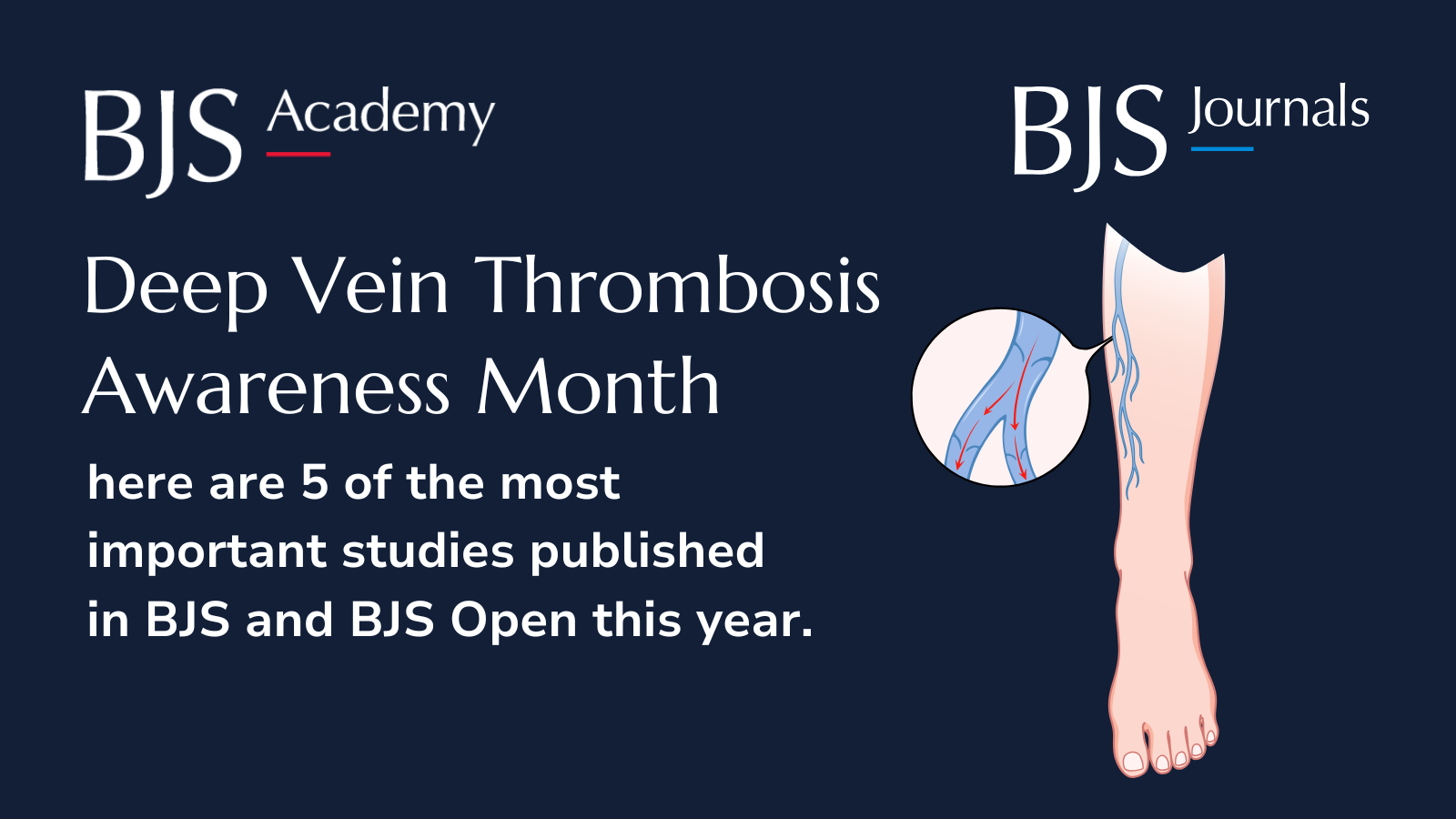
To mark National Deep Vein Thrombosis (DVT) Awareness Month, we have curated a selection of recent high-impact papers from BJS and BJS Open exploring venous thromboembolism (VTE) in surgical practice. These studies span thromboprophylaxis strategies, perioperative risk factors, and preventative interventions across a range of surgical settings. Together, they highlight the ongoing challenge of balancing thrombotic and bleeding risks, questioning routine anticoagulation practices, and identifying modifiable factors such as timing of prophylaxis and ERAS compliance. This collection reflects the evolving evidence base guiding safer, more individualised approaches to VTE prevention in modern surgical care.
______
BJS highlights:
______
Thromboprophylaxis timing and duration in bariatric surgery: impact on thromboembolism and bleeding:
This nationwide Scandinavian cohort study (SOReg, 2010–2023) evaluated how thromboprophylaxis timing and duration influence thromboembolic and bleeding outcomes after bariatric surgery. Among 83,801 patients, the overall incidence of DVT/PE was low (0.09%), with no significant differences across prophylaxis duration or timing. However, prior DVT/PE and intraoperative bleeding were strong predictors of thromboembolic events. Importantly, postoperative initiation of thromboprophylaxis was associated with a lower risk of intraoperative bleeding (OR 0.66; 95% CI 0.47–0.93). These findings suggest that tailoring thromboprophylaxis strategies—particularly favouring postoperative initiation—may help balance thrombotic and bleeding risks in bariatric surgery. Read paper.
______
Comparing the efficacy and safety of thromboprophylaxis with enoxaparin versus normal saline after liver transplantation: randomized clinical trial
This dual-centre RCT evaluates the efficacy and safety of routine thromboprophylaxis with enoxaparin following deceased-donor liver transplantation. Among 462 patients, venous thrombosis occurred in 19.3% and major bleeding in 30.5% within 90 days. The study found no reduction in overall venous thrombosis, portal vein thrombosis, or deep vein thrombosis with enoxaparin compared with placebo. However, anticoagulation was associated with a significantly higher rate of major bleeding (35.5% vs 25.5%; P = 0.020). Subgroup analysis suggested a potential benefit in reducing deep vein thrombosis among patients with hepatocellular carcinoma without a significant increase in bleeding risk. These findings question the routine use of prophylactic anticoagulation after liver transplantation and highlight the need for more tailored, risk-adapted strategies. Read paper.
______
Compression hosiery to avoid post-thrombotic syndrome: CHAPS randomized clinical trial
This UK multicentre RCT (19 hospitals) evaluated whether graduated compression stockings (GCS) reduce post-thrombotic syndrome (PTS) after proximal deep-vein thrombosis. Although stopped early due to COVID-19 (n=152 recruited), descriptive results showed a lower incidence of PTS with GCS plus anticoagulation compared with anticoagulation alone (30% vs 51%), with no cases of severe PTS in the GCS group. Adherence was moderate, and no serious adverse events related to GCS were reported, while quality of life was similar between groups. These findings align with earlier studies suggesting a protective effect of compression hosiery and highlight the need for adequately powered trials to definitively guide clinical practice. Read paper.
______
BJS Open highlights:
______
Venous thromboembolism risk in the postoperative interval during the COVID-19 pandemic: meta-analysis
This systematic review and meta-analysis evaluated global postoperative venous thromboembolism (VTE) incidence during the COVID-19 pandemic, including over 3 million patients from 17 studies. The analysis demonstrated that perioperative COVID-19 infection was associated with substantially increased VTE rates, particularly in orthopaedic procedures and emergency general and gastrointestinal surgery. In contrast, no significant difference in VTE incidence was observed when comparing pre-pandemic and pandemic periods overall, suggesting that infection status rather than the pandemic itself drove risk. The findings highlight COVID-19 as a strong perioperative prothrombotic factor across surgical specialties. Further research is required to clarify how evolving viral variants and vaccination influence postoperative VTE risk. Read paper.
______
Effect of Enhanced Recovery After Surgery compliance on postoperative venous thromboembolism
This multicentre retrospective cohort study evaluated the association between Enhanced Recovery After Surgery (ERAS) compliance and postoperative venous thromboembolism (VTE) in over 8000 patients undergoing surgery. The incidence of VTE was 1.5%, and higher overall ERAS compliance was significantly associated with a reduced risk, with each incremental increase in compliance corresponding to a 23% decrease in VTE occurrence. Patients who developed VTE were more likely to have low or moderate adherence to ERAS protocols, and this association remained significant after adjustment for confounders. These findings suggest that ERAS pathways may confer protective effects against postoperative thrombotic complications, potentially through improved perioperative care processes such as early mobilization. Overall, optimizing ERAS compliance represents a modifiable strategy to reduce postoperative VTE across surgical disciplines. Read paper.



.png)





.jpg)

