BJS-2025-0538
Cutting edge blog
General
Guest blog
Presidents under the knife
An introduction: 'Presidents Under the Knife' blog series
Per-Olof Hasselgren, MD, PhD
Department of Surgery; Beth Israel Deaconess Medical Center, Boston, MA; George H.A. Clowes Distinguished Professor of Surgery at Harvard Medical School; https://www.per-olofhasselgren.com/
13112025
The health of political leaders has always been of public interest. In the US, in particular, health issues surrounding the president continue to create headlines, and although it may be debated whether private information about diseases and their treatments should be made public, nowadays everyone, including the presidents, agree that information about the health of officials could and should be open to the public eye. After all, conditions that may affect the wellbeing of the president, especially when surgery is involved, could have huge implications from both a political and economic standpoint.
My book, Presidents Under the Knife. Surgical Successes, Failures, and Deceptions, narrates surgeries performed on presidents while they were in office. The surgical procedures are described from a surgeon’s perspective, but importantly, the book also recounts many of the political fallouts and implications of the procedures. As implied in the subtitle of the book, we find successes, failures, and deceptions when learning about the surgeries on American presidents.
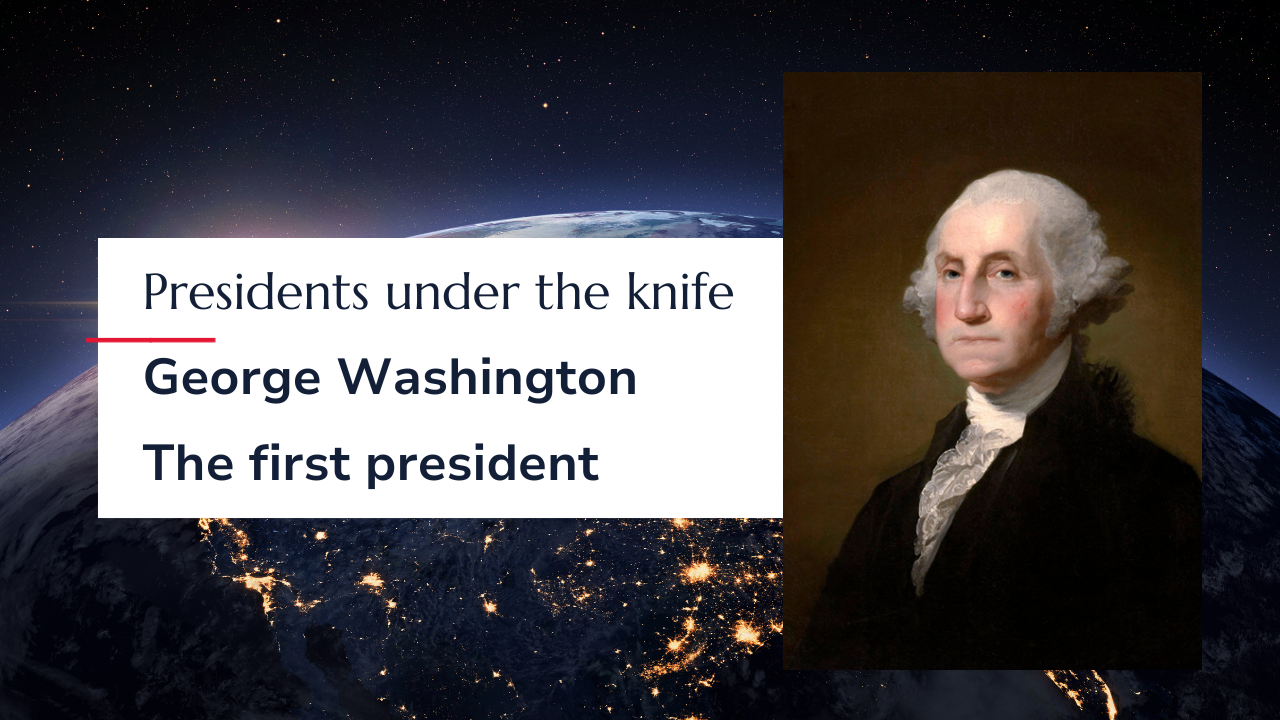
Even the country’s first president had surgery. In June of 1789, only a couple of months into his presidency, Washington had surgery for a “tumor” on his left leg. It turned out to be a large abscess giving rise to immense pain and “threatening” fevers. The cutting open of the abscess and drainage of its content may have saved the president from dying of sepsis.
Washington was less fortunate a decade later when he developed what many recent medical historians believe was epiglottitis. The swelling in his throat choked the ex-president to death. His life might have been saved by a tracheotomy as was proposed by one of the physicians attending Washington’s sickbed. However, instead of life-saving surgery, the president was subjected to those days’ standard treatments of inflammation, bleeding and purging. Washington was bled repeatedly, which, if anything, hastened his demise. To make things worse, he also received drugs that caused diarrhea and vomiting, purging that most likely also contributed to his death less than forty-eight hours after getting sick.
One of the greatest successes from a surgical standpoint was the saving of President Ronald Reagan’s life following his shooting on March 30, 1981. After being rushed to the George Washington University Hospital, it became obvious that the president was actively bleeding in his chest and that his life was threatened. He was swiftly taken to the operating room where a thoracotomy was performed and the bleeding stopped. Reagan could return to the White House twelve days after the attempted assassination.
In light of the success saving Reagan’s life, the failures surrounding the surgeries of some other presidents stand out as tragic failures. James Garfield was shot by a deranged political opponent in 1881. Although the injuries caused by the bullet were not life-threatening, Garfield died seventy-nine painful days later by widespread infections caused by the surgeons’ dirty fingers. At the trial, the president’s assassin claimed that, “Yes, I shot the president, but his physicians killed him.”
Deceptions, of course, are not uncommon in politics and have also been employed in the reporting of presidents’ health. A prime example is the circumstances surrounding the surgery on Grover Cleveland. Shortly after President Cleveland was inaugurated for his second term, he felt a rough spot on the roof of his mouth. His doctors discovered a tumor in the president’s mouth, and fearing it was cancer, they recommended surgery. Cleveland reluctantly agreed, but only if the operation could be done in secrecy. His voice needed to be unchanged and he needed to look strong and healthy (he was getting ready for an important report to Congress). No visible scars would be tolerated – and the moustache needed to stay! In July of 1893, Cleveland underwent a daring operation by a team of surgeons sworn to secrecy. The procedure was done aboard a private yacht sailing along the coast of Long Island and despite the magnitude of the surgery and the risks involved, Cleveland survived and was fit for fight when it was time for the report to Congress.
In a series of upcoming blogs, I plan to tell the stories of the nine US presidents who had surgery while in office. I hope you will find them both educational and entertaining.
__________
This post contains material from Presidents Under the Knife: Surgical Successes, Failures and Deceptions © 2025 Per-Olof Hasselgren by permission of McFarland & Company, Inc., Box 611, Jefferson NC 28640.



.png)





.jpg)